

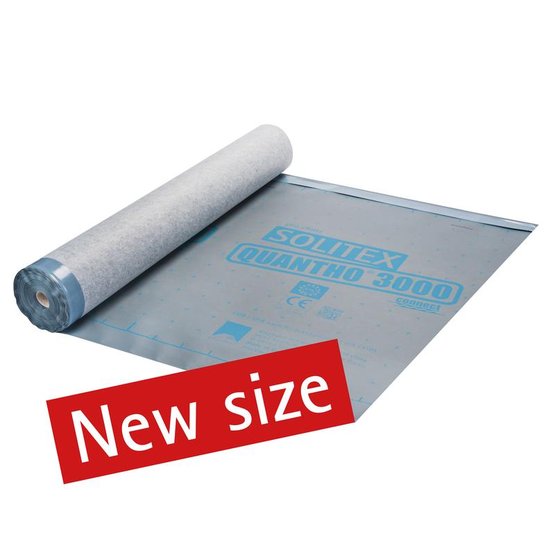
SOLITEX QUANTHO 3000 connect
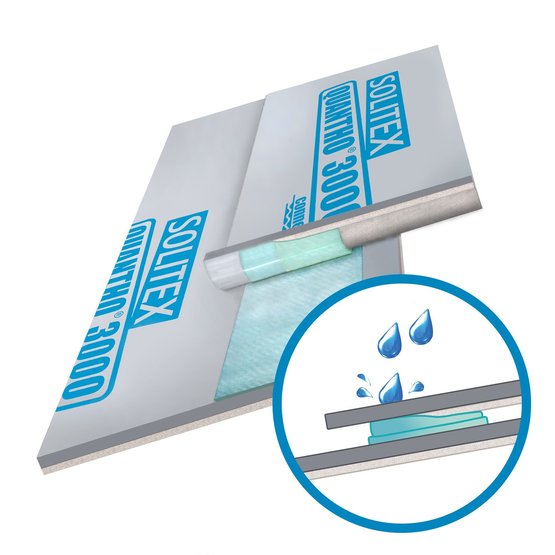
Medium-weight roofing underlay with self-sealing perforations and waterproof adhesive strips





Advantages
- Maximum protection for the roof structure: excellent hail impact resistance as per ETA-23/0532 and Swiss VKF/AEAI directive (HR 5 class)
- Reliable weatherproof roofs: underlay for demanding conditions for roof pitches ≥10° (2.1:12) with TESCON NAIDECK as additional perforation sealing over rigid subsurfaces, as per ETA-23/0532
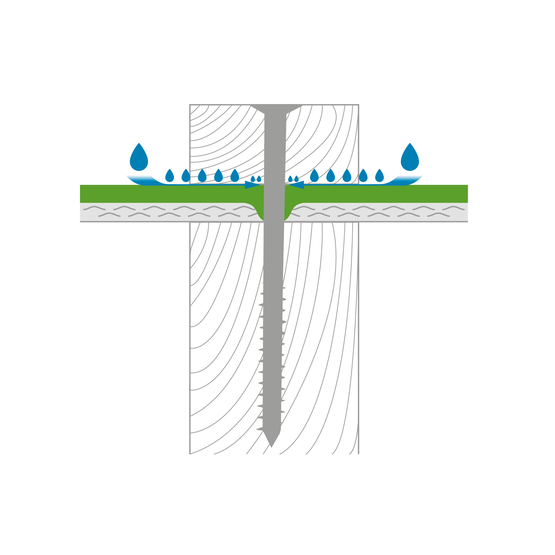
- Efficient installation: waterproof seams and self-sealing perforations for roof pitches ≥14° (3:12) without the need for additional nail-sealing tapes, as per ETA-23/0532
- Quick waterproof adhesion: innovative anti-capillary sealing lip at the 'connect’ self-adhesive strips on the edges of the membrane
- Made-to-order cutting and welding service available
- Flexible planning of construction schedules: at least 3 months of outdoor exposure
- Long-term protection: high resistance to ageing and heat of the functional film
- Provides protection during the construction period: suitable as a temporary covering
Areas of application
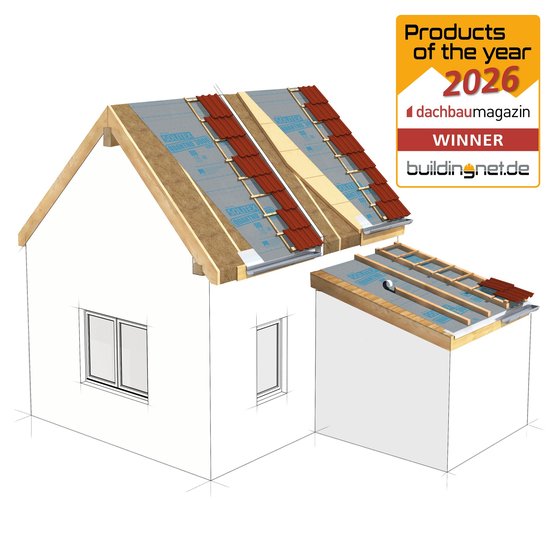
For use as a diffusion-open roofing underlay over roof sheathing, MDF and wood-fibre underlay panels, and over all thermal insulation materials, including blown-in insulation materials.
Also available as a pre-fabricated sheet for your roofing project in Germany, Switzerland, Austria, France, the Netherlands and Belgium with the pro clima made-to-order cutting and bonding service!
Installation instructions
I. Installation steps
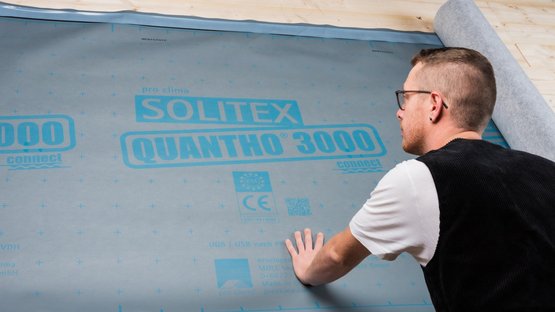
II. Underlay/temp. covering w/o nail seals, pitch ≥14°
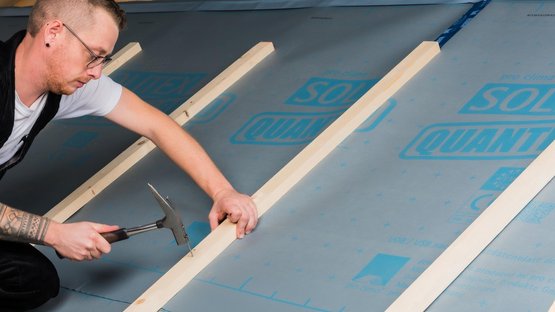
III. Rainproof sub-roof, e.g. over roof sheathing with nail-sealing tape, pitch ≥10° (2.1:12)
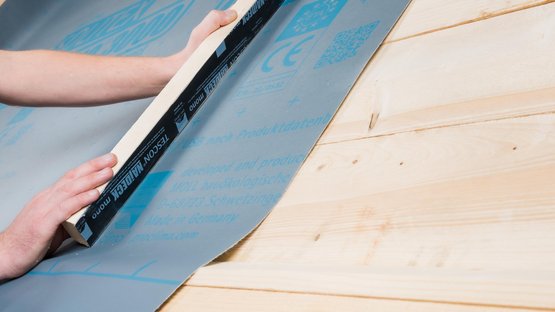
General conditions
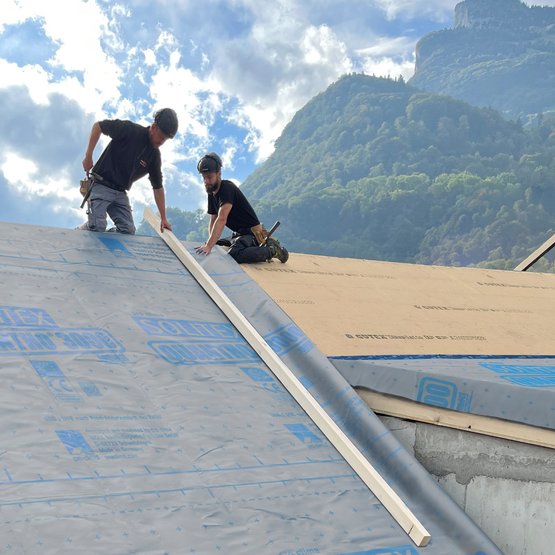
SOLITEX QUANTHO 3000 connect membranes are to be installed with the printed side facing the installation technician. The membranes are to be installed as a roofing underlay membrane horizontally (parallel to the eave) in a taut manner with no sagging.
Roofing underlay membrane
The roof pitch must be at least 14° (3:12). National regulations (e.g. minimum roof pitch for the roof covering) should be taken into account here.
Ensure that the subsurface is even when installing the membrane as a roofing underlay membrane. In the case of installation with seam and perforation protection, the general conditions included in the installation instructions and in ETA-23/0532 are to be taken into account.
When the membrane is installed as a freely hanging underlay membrane without sheathing, the rafter spacing is limited to 100 cm (3’).
When the membrane is used to create a rainproof sub-roof for roof pitches ≥10° (2.1:12), it is to be installed over even sheathing or another pressure-resistant subsurface. The SOLITEX QUANTHO 3000 connect membrane is located underneath the counter battens, and a nail-sealing tape such as TESCON NAIDECK is installed between the membrane and the counter battens in this application case.
Fasteners may not be applied in areas where water runs off in a collected manner (e.g. in roof valleys).
General
Ridge ventilation should be provided in the case of non-insulated attics that have not been converted. To do so, install the membrane in such a way that it stops 5 cm (2″) before the ridge. In addition, permanent ventilation fittings should be provided in the unconverted attic.
The membrane should be protected against the long-term impacts of UV radiation (e.g. by darkening windows).
The membrane can be used as temporary covering for up to 4 months in Central and Northern Europe, Canada and the northern United States, or 3 months in the rest of the world, to protect the building structure during the construction phase in accordance with the regulations of the Central Association of the German Roofing Trade (ZVDH).
The system products TESCON NAIDECK nail-sealing tape, ORCON F adhesive sealant and TESCON VANA are to be used for sealing of overlaps and joints.
The connect variant has two self-adhesive strips for reliable external sealing. The specifications of the applicable national regulations are to be taken into account when carrying out installation and adhesion.
Installation during hot weather
Roofing underlay membranes with top layers that serve as their functional films should be protected against excessive mechanical stresses and loading during hot weather periods. These stresses can be caused by foot traffic, storage of materials, or point loads, for example. Protective measures such as roof ladders, temporary safety battens, and protective or insulation panels have proven useful in practice in this regard. Ensure that there is sufficient grip to prevent slip hazards.
Additional instructions for blown-in insulation materials
SOLITEX QUANTHO 3000 connect can also be used as a boundary layer for blown-in insulation materials of all types. The battens must already be fitted before the blowing-in process is carried out. A protruding lath must be installed under the supporting battens in the centre of the space between the rafters so that moisture occurring under the covering is drained off centrally between the rafters. The protruding lath should be at least 1 cm (⅜″) thicker than the counter battens. This limits the bulging of the membranes during the blowing-in process and creates the necessary cross-sectional area for ventilation.
If the insulation material is blown in from the outside, the blow-in holes can subsequently be taped using TESCON VANA with a width of 15 cm (6″).
Made-to-order membranes for roof projects: Cutting and bonding service for underlay and airtightness membranes
Make your roofs weathertight and airtight even more quickly and easily
Are you planning to use pro clima membranes on an upcoming roof project? If so, you no longer need to worry about bonding the individual lengths of membrane to each other and cutting them to size to fit your roof surface. You can now order many pro clima membranes already cut and bonded to match your roof surface! As part of this service, SOLITEX WELDANO 3000 roofing underlay membranes are welded together in the workshop, and SOLITEX MENTO 3000/5000 connect, SOLITEX QUANTHO 3000 connect, INTELLO X connect, DA connect and DASAPLANO 0,01 connect are joined using their self-adhesive strips.
In this way, pro clima takes care of the preparation of underlay and airtightness membranes for your roof project in an automated, tailored and precise manner at a reasonable price. You will be able to install reliably sealed roof structures more efficiently, even if your roof geometry demands more complicated shapes. This made-to-order pre-fabrication service saves valuable installation time on site and also makes you less dependent on weather conditions.
This service is currently available in Germany, Switzerland, Austria, France, the Netherlands and Belgium.
Advantages
- Time savings due to shorter installation period on site
- No additional finishing work required: made-to-order membranes are delivered that fit your roof surface perfectly
- The underlying building structures remain dry: prepared sheeting provides immediate protection in adverse weather conditions
- High-quality end products thanks to assembly under protected conditions in the workshop
- Efficient installation thanks to technical support from pro clima
How does this service work: It's this easy ....
1. Tell us the shape and dimensions of your roof surface
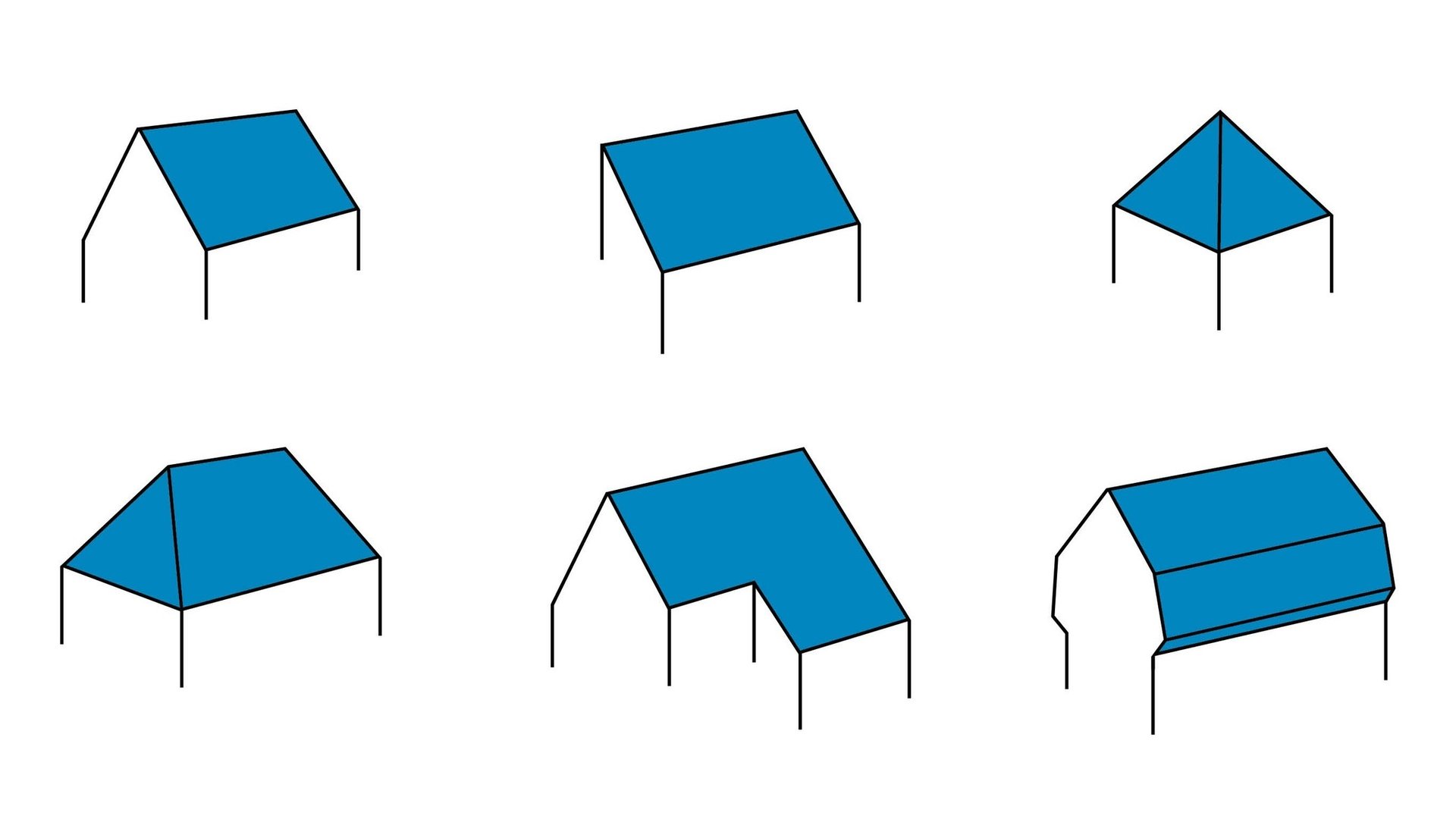
a. Define the roof type
What type of roof is involved? Is it a gable roof, a single-pitched roof, a tented roof, etc. Please specify the geometrical form of the roof and provide an outline sketch of the roof with actual lengths and surface areas.
b. Specify any special geometries
Please specify any special geometries such as valleys, roof dormers, skylights etc. The absence or presence of such features will determine whether the resulting pre-fabricated sheet will be a standard geometry (2D and rectangular) or a special geometry (2D non-rectangular, 2D rectangular with additional sections).
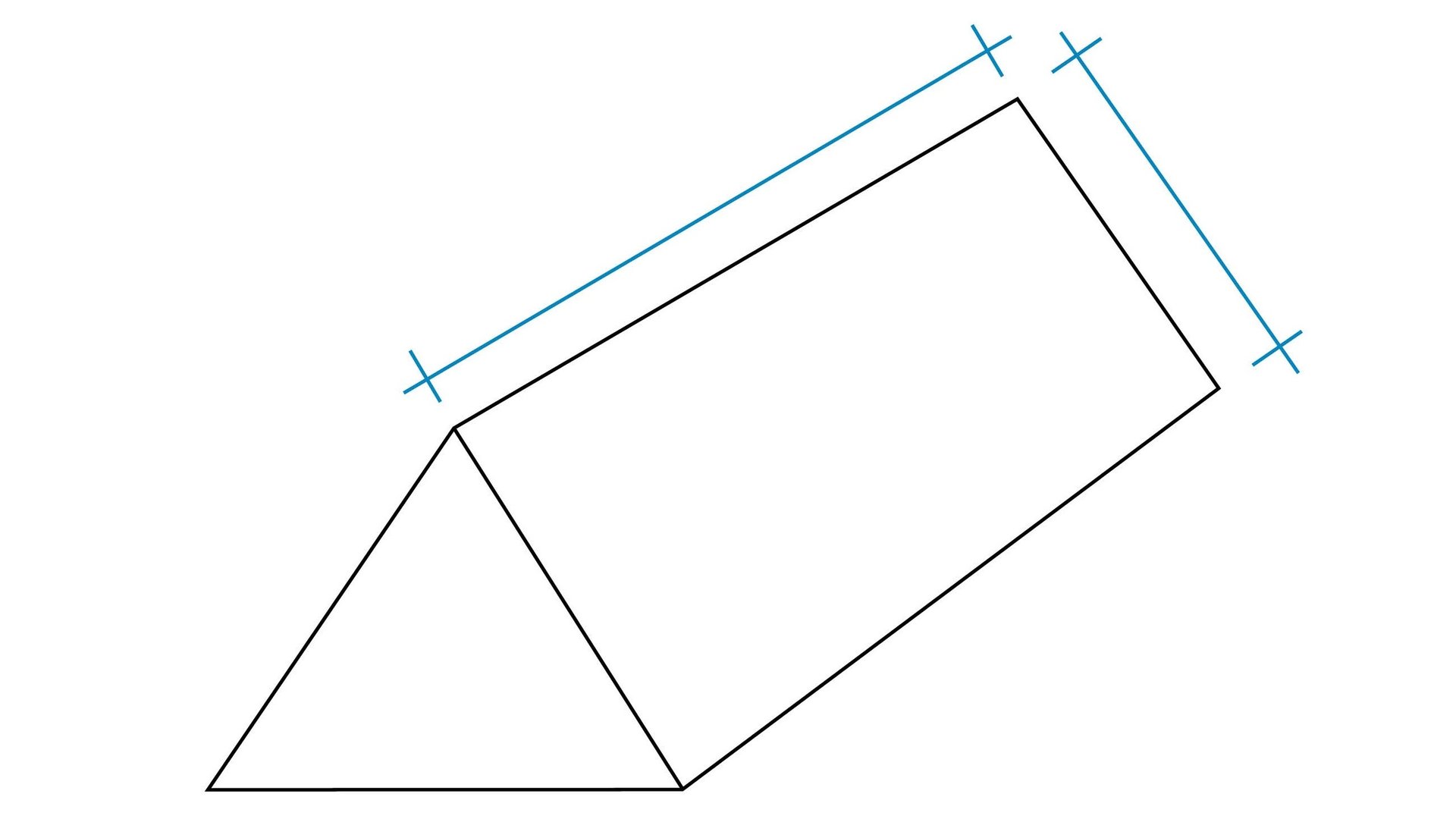
c. Specify the eave and bargeboard lengths
Please specify in your drawing the dimensions of the bargeboards and eaves and all dimensions – e.g. valley lengths – to be taken into account in determining the surface area.
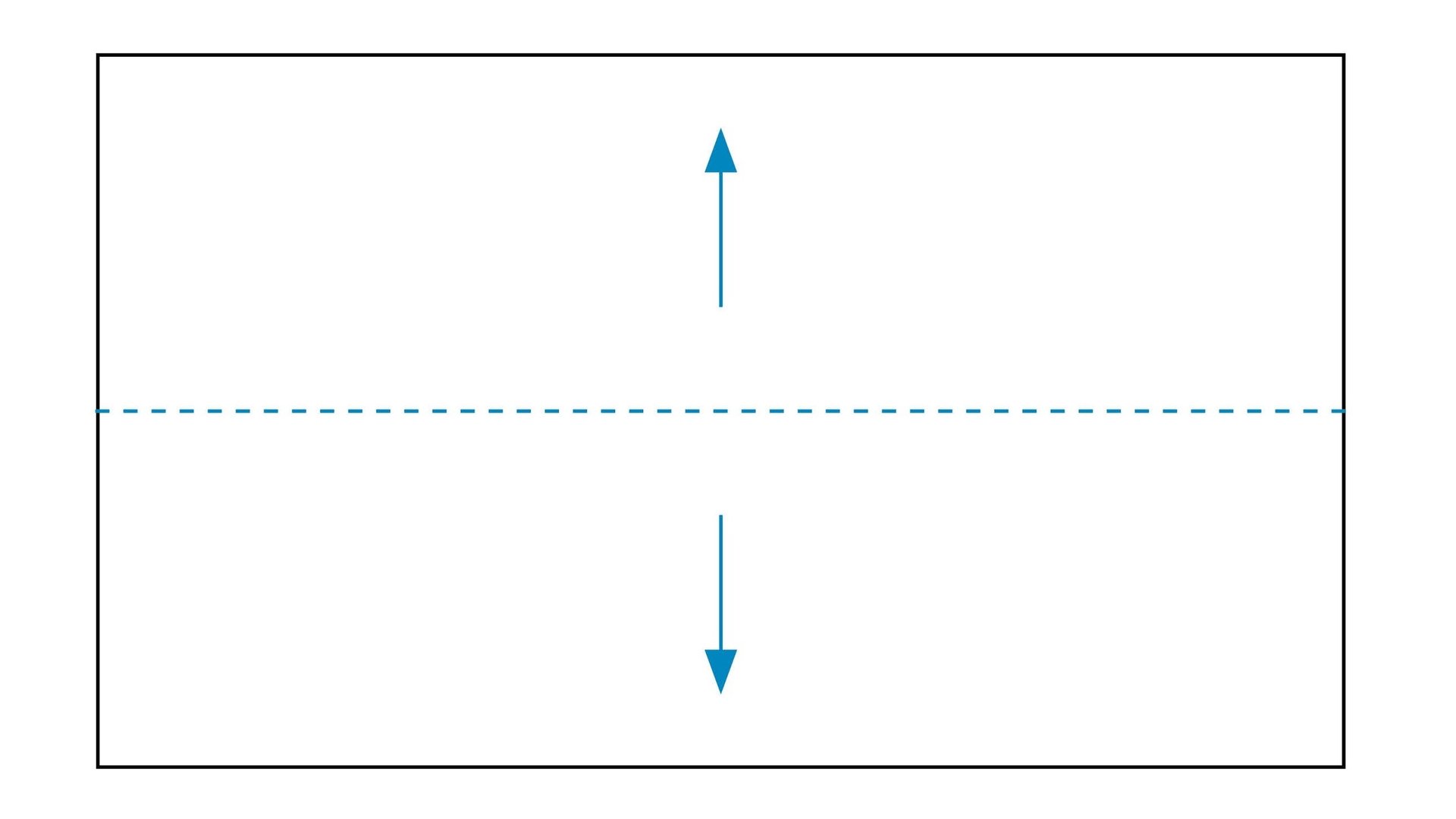
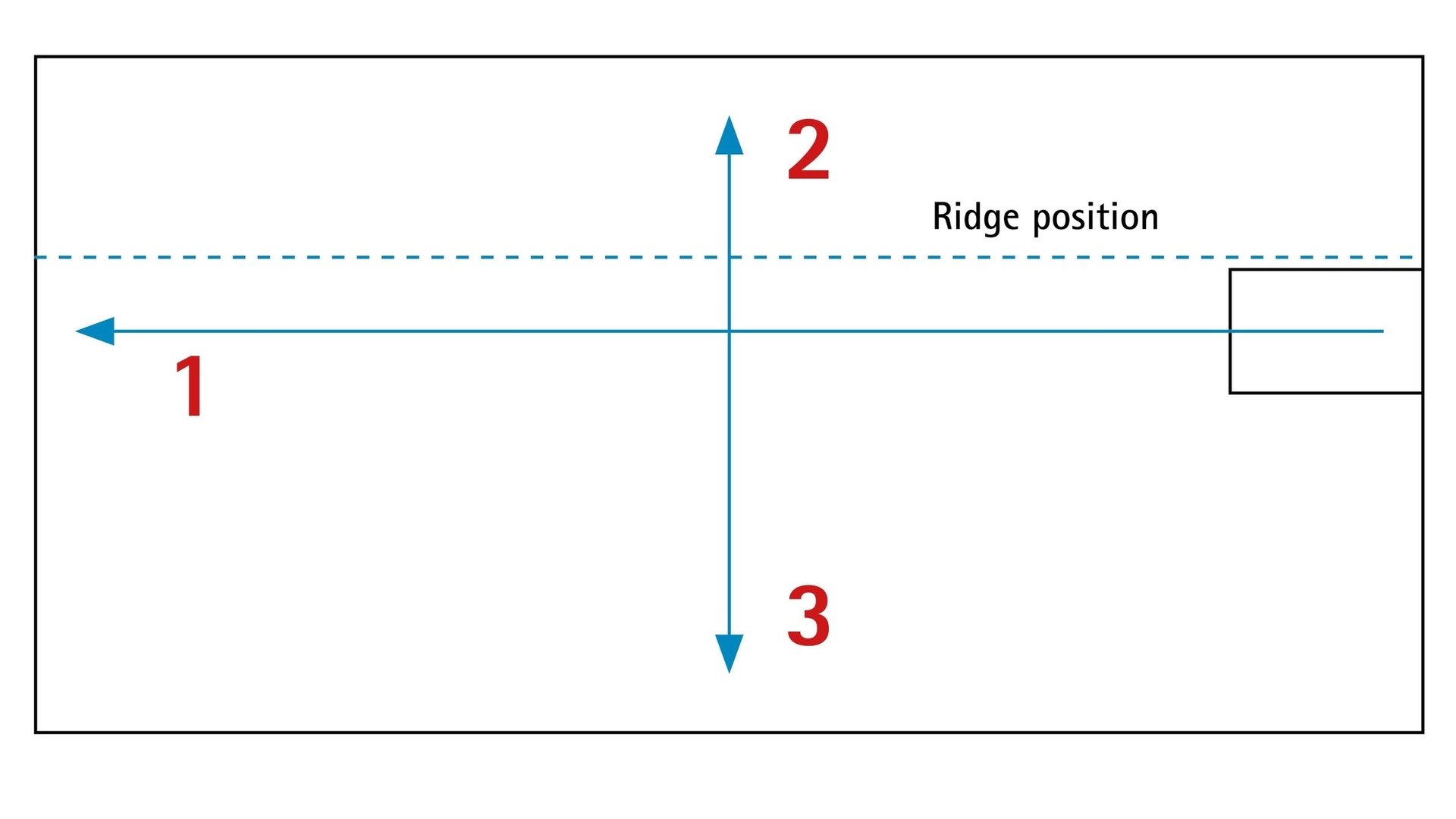
d. Specify the ridge position and water run-off direction
Please indicate on your drawing the position of the ridge with a line and the water run-off direction with a direction arrow.
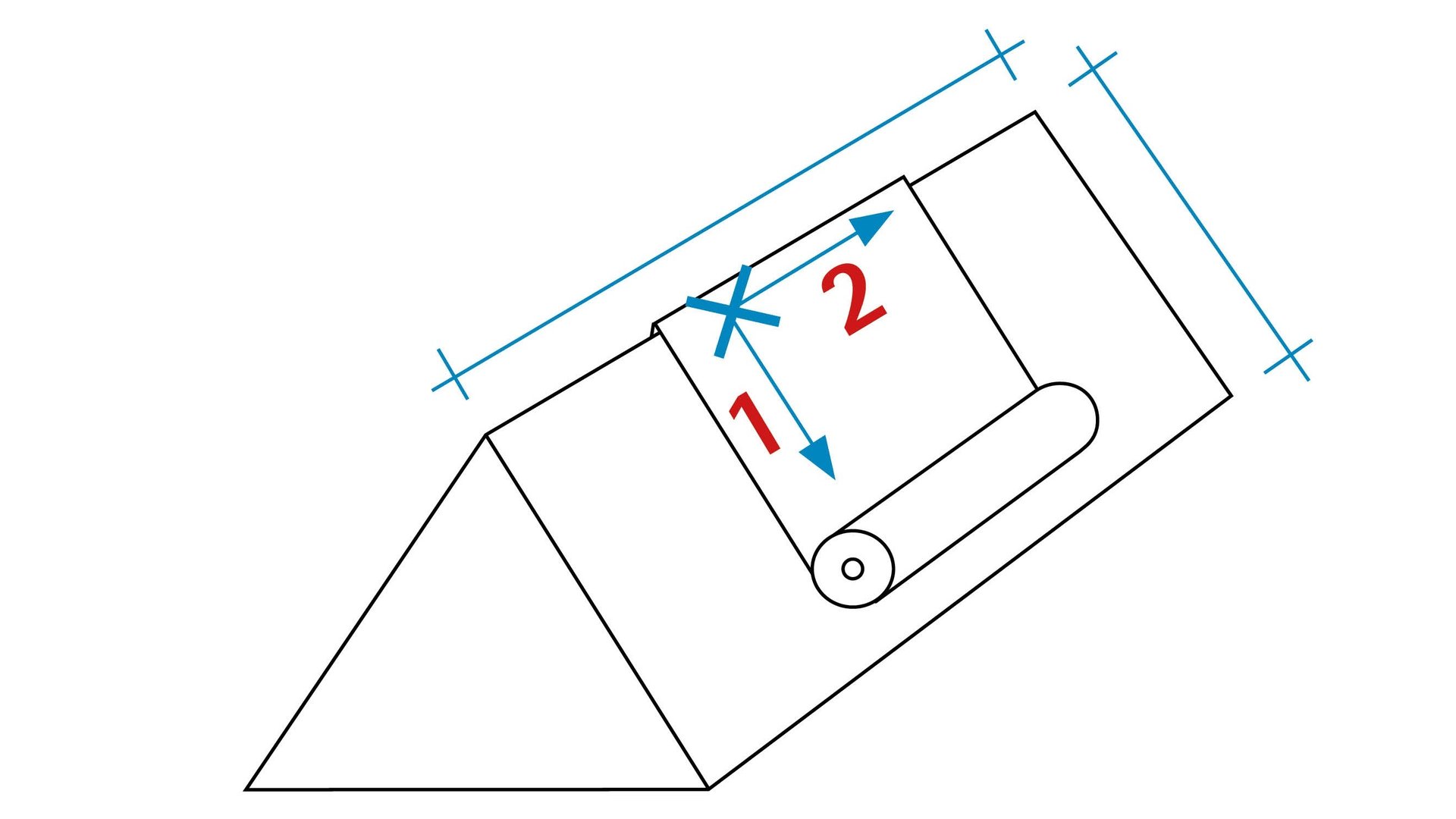
e. Specify the starting position and roll-out direction (longitudinal and perpendicular)
The prepared sheet is generally delivered to your building site as a package that is rolled up in two directions.
Have you planned a specific roll-out starting position, direction and sequence? If so, please mark this position with a cross. Ideally, you should indicate the sequence of roll-out directions with arrows and sequential numbering (1, 2).
f. Additional services
- Marking/cutting of skylights
- Marking/cutting of any additional penetrations (vent pipes etc.)
- Marking of counter battens
In order to be able to provide these services, we need you to send us .dwg or .dxf files and complete our order and inquiry form, which is available here
2. Production of the pre-fabricated sheet and shipping
Once you have placed an order, the individual lengths of membrane will be stuck or welded together, as appropriate, and cut to size for your specific roof project. If required, the positions of the counter battens, skylights and any other penetrations can be marked.
The prepared sheet is then rolled up, placed on a pallet and shrink-wrapped for shipping. We aim to deliver to your site within 10 days of the order being placed for delivery locations in Germany, Austria, France, the Netherlands and Belgium.
3. Roll out and install the sheet
At the building site, the rolled-up package is lifted to the planned starting point on the roof and is then rolled out as planned.
Our Technical Support will be glad to provide assistance.
Example of a roll-out sequence sketch










pro clima on the outside ... and it's a wrap!


Weathertightness with pro clima
Find out more about pro clima's system solutions and products for sealing your building envelope on the outside - with roofing underlay membranes, breather membranes for facades, protective membranes for timber structures during the construction phase, and a full range of sealing tapes, sealants and accessories.